Future in Focus: Rewriting How We Celebrate Mothers

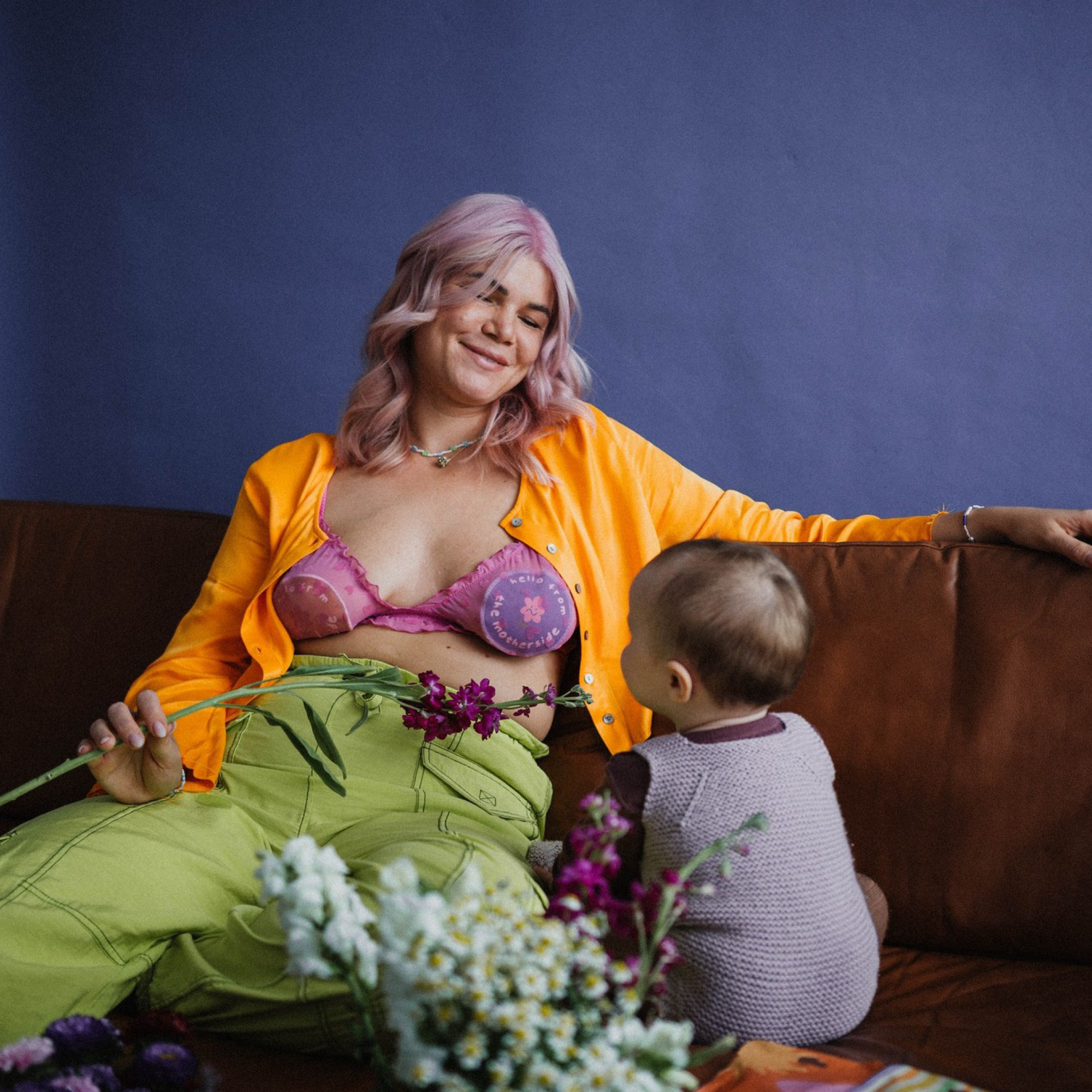 @hey.moodie
 Mother’s Day has long been framed around gestures, with flowers, cards and breakfast in bed becoming symbols of appreciation for the visible labour of caregiving.
But what if the future of Mother’s Day was not about appreciation alone, but about recognition?
What if we truly understood the full physical, emotional and psychological weight of motherhood? For brands, this question signals a shift already underway, from celebrating task management to acknowledging transformation.
For decades, motherhood has been operationalised. Think feeding schedules, sleep training, milestones and productivity hacks for ‘managing the load’. What was (and in some cases still is) rarely named is the identity recalibration beneath it all.
What is Matrescence?
Coined in the 1970s but only recently gaining cultural traction, matrescence describes the profound physical, psychological, emotional and social transformation that occurs when a woman becomes a mother. Much like adolescence, it is not a moment but a transition, one that reshapes the brain, body and sense of self.
Once an academic obscurity, it is now slowly moving into mainstream consciousness. As highlighted in our Empowered Motherhood: The Evolving Conversation reports, pioneering voices are leveraging their platforms to educate audiences about this transformative transition and to champion caregiving perspectives grounded in empathy and openness, rather than endurance and efficiency.
Cultural Change Starts with Language
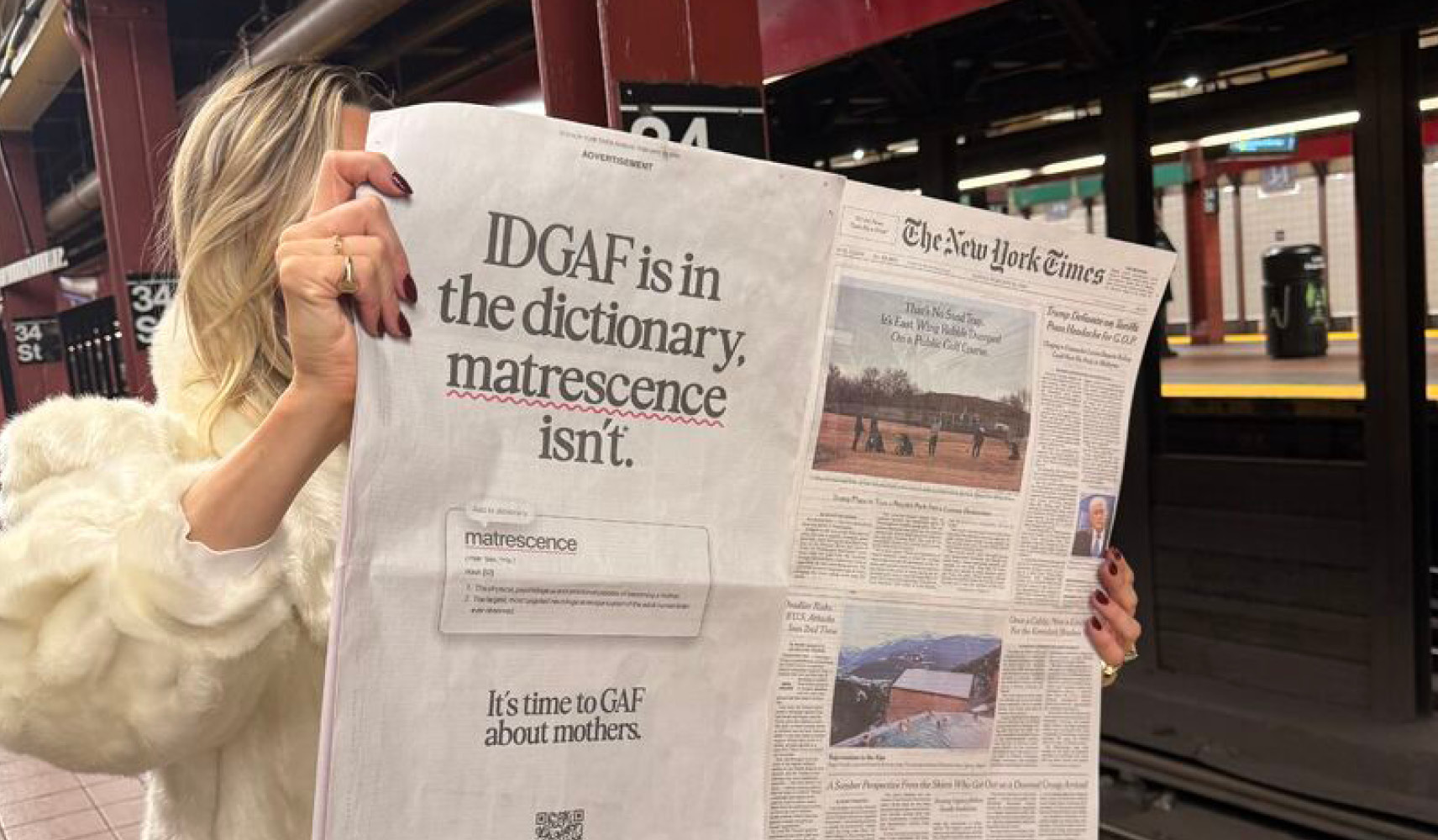
A powerful example of this recognition is the recent campaign by Peanut and Tommee Tippee to put ‘matrescence’ in the dictionary. By advocating for formal recognition of the term, the campaign highlights a simple but powerful idea: cultural change often starts with language.
When we have the words to describe a transformation, we’re better equipped to support it.
Parenting Out Loud
As matrescence gains momentum, so too will the culture of ‘parenting out loud.’ Conversations once confined to closed circles will continue to enter public conversation. We’ve already seen this reflected for Mother’s Day 2026, with ‘The Woman Before Me,’ a campaign by From You To Me and Peanut. The campaign aims to recognise mothers’ whole stories, not just the chapter that begins with parenthood. It followed research revealing that 69% of mothers say they’ve experienced a loss of identity, a feeling many often quietly carry.
This shift reflects a broader cultural understanding of motherhood as a transformative stage rather than a static role. As conversations around identity recalibration become more visible and as terms like matrescence enter mainstream language, the narrative for celebrating mothers must evolve with them.
What’s next for Mother’s Day?
Future Mother’s Day activations present a powerful opportunity for brands and designers to continue to move beyond surface-level gratitude. There’s potential to create experiences that truly recognise mothers, shifting away from outdated stereotypes toward more authentic, multidimensional representations of their identities.
By designing with empathy and insight, brands can celebrate the full complexity of motherhood while building meaningful connections that resonate long after the day itself.
Mother’s Day in the years ahead will become less about thanking mothers for coping and more about honouring the women they were, the mothers they are, and the complexity of holding both. And as a mother myself, that recognition may be the most meaningful gesture of all.