Designing With AI: Finding Originality & Taste in a Faster Creative World

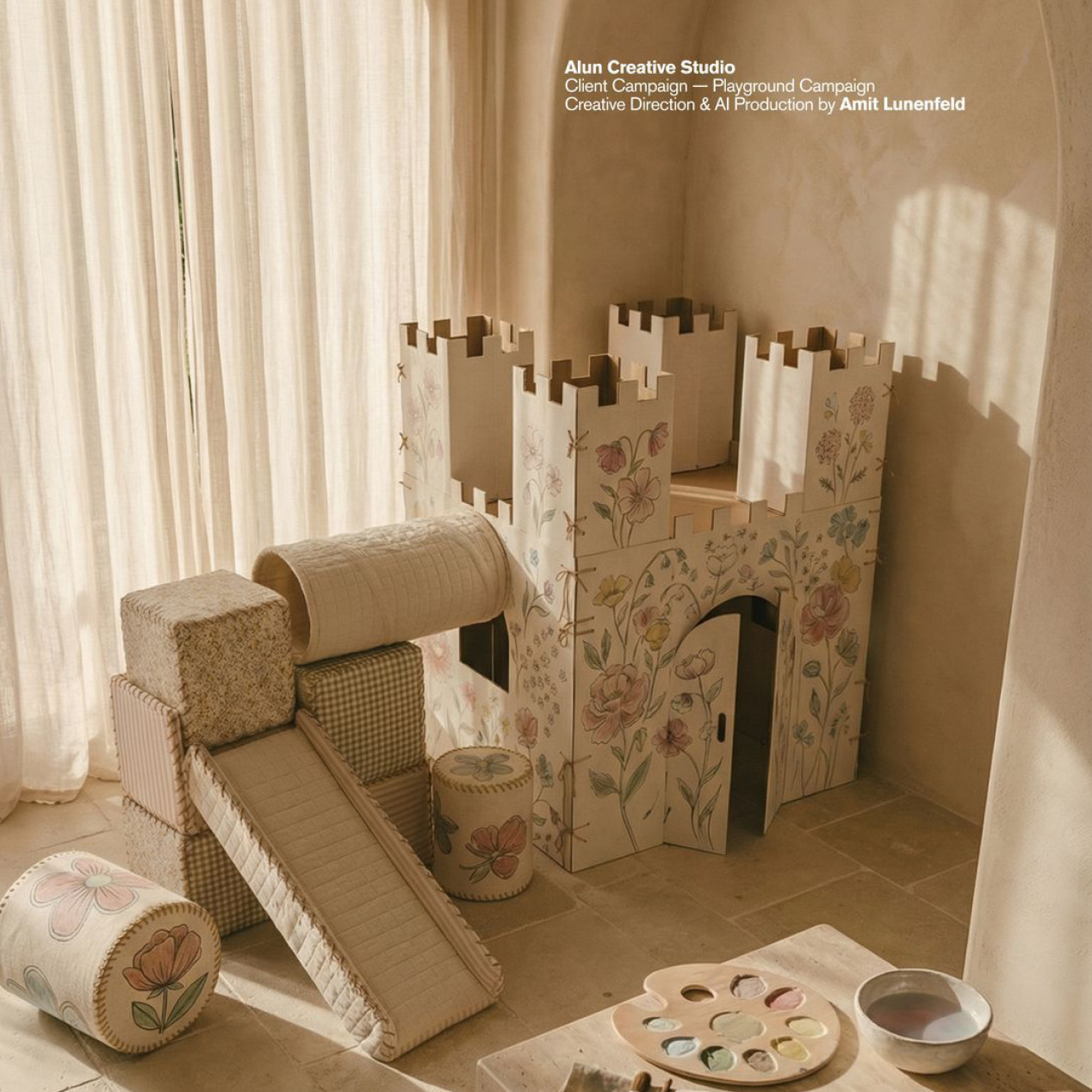 @aluncreative
 Artificial Intelligence is starting to show up in almost every part of the product design process, from trend tracking through to fully realised product visuals in seconds. Over the past year, it’s featured in nearly every conversation I’ve had with clients. There’s a sense of excitement, definitely, but also a quiet uncertainty about what this really means for the role of the designer.
Change in the creative industry isn’t new. When I first started working in trends, mood boards were still physical; foam boards, magazine tears and spray mount. Now they live on digital platforms, shared instantly across teams and time zones. What feels different about AI is the pace. It’s not a gradual evolution of tools. It’s a sudden expansion of what’s possible.
What I’m seeing isn’t one clear direction, but a set of tensions that designers are having to navigate in real time. Questions around originality, speed, and value are no longer theoretical. They’re showing up in day-to-day decisions.
The Pull toward the Predictable
One of the most immediate benefits of AI is how quickly it can process and synthesise information. It has the potential to make product development more responsive, more accurate, and in many cases more efficient. For brands operating under pressure (tight timelines, tighter margins) that’s incredibly appealing.
But this same capability risks narrowing creative ambition.
When decisions are driven by data, there’s a natural tendency to follow what’s already working, nudging brands toward safer, data-backed decisions. If a product performed well last season, it’s now very easy to generate iterations and move quickly into production. In an industry shaped by commercial pressure and a fast fashion ethos, the temptation to shortcut the creative process is strong.
In many ways, this is just an acceleration of a mindset that already exists, particularly in fast-moving sectors. AI simply removes more of the friction.
Over time, this can lead to a kind of creative loop. Design becomes less about imagining something new, and more about refining what already exists. Outputs start to converge, and brands risk drifting out of step as their customer’s tastes shift.
The more we optimise, the harder it becomes to surprise.
The Opportunity to Explore Further
At the same time, I’ve seen AI unlock something much more positive.
As a tool for thinking visually, AI is incredibly powerful. It allows you to explore directions quickly, to see things you might not have otherwise considered. Because it reduces the cost and time needed to explore ideas, it becomes easier to test things that might previously have felt too niche, too specific or too risky. Designers can visualise more, try more, and push further before anything is committed to production.
That changes the question. Instead of asking, “Will this work for everyone?” it becomes, “Who is this really for?” and whether it resonates deeply enough to matter.
That’s a very different mindset. One that allows for more distinct, more targeted expressions of design.
What feels most likely is not one outcome or the other, but both happening at once. A more predictable, optimised mainstream sitting alongside more experimental, niche ideas at the edges.
When Making Gets Easier, Deciding Gets Harder
If there’s one shift that feels undeniable, it’s the speed of creation.
Ideas that would have taken hours, or days, can now be generated in minutes.
When everyone can generate multiple ideas quickly, the technical ability to produce, iterate and execute designs is no longer what sets designers apart. Instead, it’s about what you choose to move forward with.
I think this is where the role of the designer starts to shift quite noticeably. Less time spent on execution, more emphasis on strategic judgment. On knowing when something feels right, when it aligns with a brand, when it adds something new and meaningful, rather than just more.
Without a clear point of view, AI can pull you toward the average rather than the distinctive. Taste, in that sense, becomes more important, but also more demanding. It’s not just instinct. It’s something that needs to be developed, articulated and, at times, defended. In a landscape where almost anything can be made, knowing what not to make becomes just as valuable.
What This Means for Designers Now
AI isn’t going to replace designers, but it is changing what makes them valuable. The emphasis shifts; from making to deciding, from execution to perspective.
At TrendBible, this is something we’re actively working through. For us, AI is a tool to enhance the work we do, not define it. It allows us to move faster and explore more, but it sits alongside human insight, cultural understanding and a clear creative point of view.
Our focus is on helping brands to navigate this shift thoughtfully, using AI where it adds value, while staying grounded in originality and relevance.
Because the real challenge isn’t whether to use AI. It’s how to use it without losing what makes design meaningful in the first place.